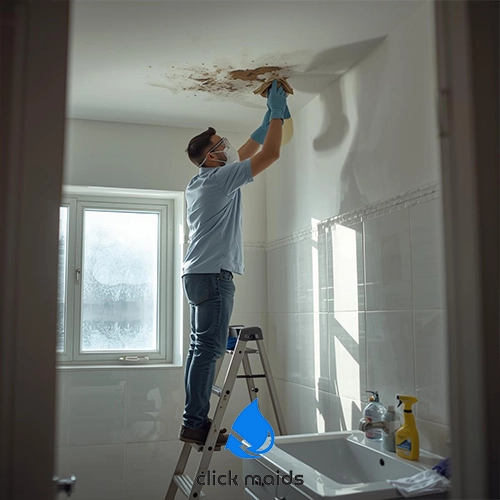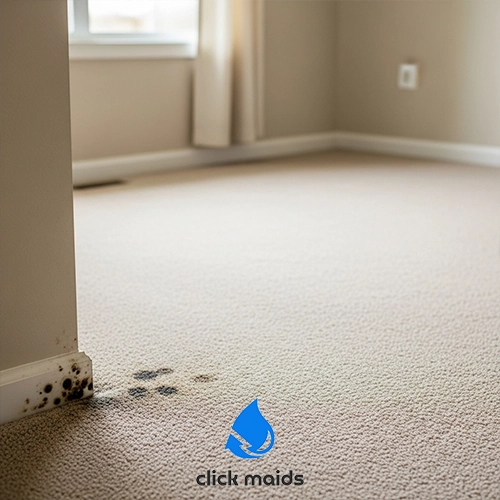

Mold on the ceiling is more than just an unsightly mark, it can indicate moisture issues and affect indoor air quality. In this guide, Click Maids will explain how to safely and effectively clean mold off ceiling surfaces, while also helping you to understand why it forms and how to prevent it from returning.
Ready for a Cleaner Space?
Schedule Your Service Today
Call us today and book your service; we’ll get your spotless home back to you!
Call us on (587) 355-3590 and our experts will guide you through the whole process.

Why Mold Grows on Ceilings
Before learning how to clean mold off ceilings, it’s important to understand what causes it. Mold typically develops due to:
- high humidity
- poor ventilation
- roof leaks
- bathroom steam build-up
- plumbing issues above the ceiling
Moisture tends to rise and settle in ceilings, making those in bathrooms, kitchens and basements especially vulnerable.
Safety First Before Cleaning Mold
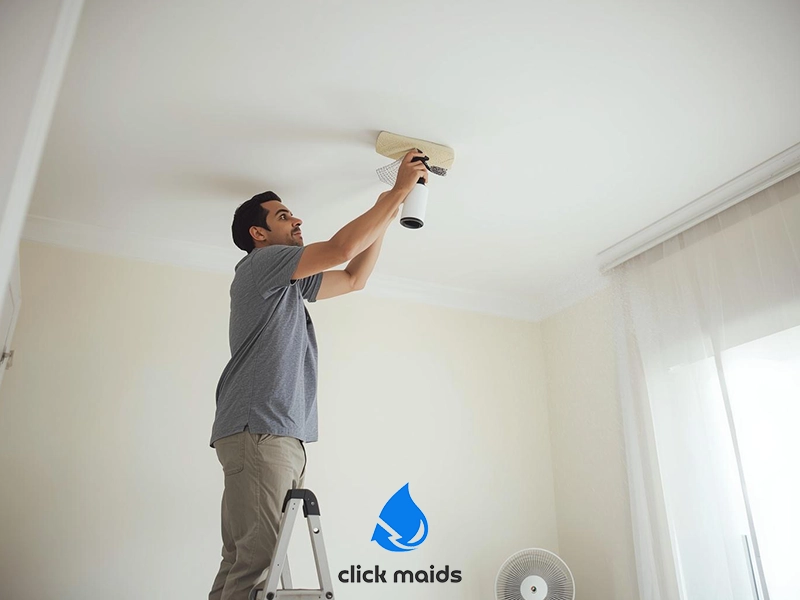
When preparing to clean mold off ceiling surfaces, safety should be your first priority.
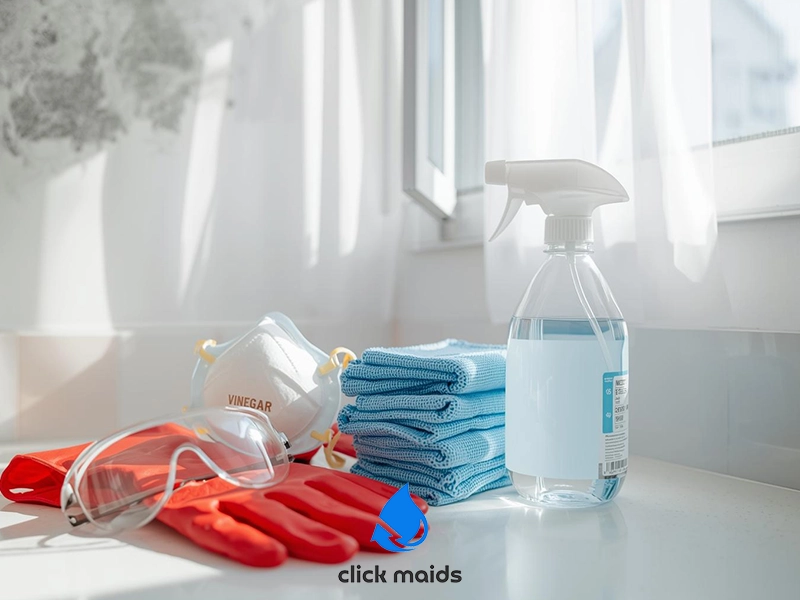
Protect yourself with the following:
- Gloves
- Protective eyewear
- a mask (preferably an N95 mask).
- Long sleeve
Open windows to ventilate the area and, if possible, use a fan to improve air circulation. Avoid mixing cleaning chemicals, especially bleach and ammonia.
Supplies You’ll Need
To clean mold off ceiling areas properly, gather these items:
- Spray bottle
- White vinegar or hydrogen peroxide
- Mild dish soap.
- Warm water.
- Soft brush or sponge
- Microfiber cloths
- Step ladder
If you are cleaning a painted ceiling, always test a small, hidden area first to prevent discolouration.
Step-by-Step: How to Clean Mold Off Ceiling
1. Prepare the area.
Move furniture away from the area affected by mold and cover the floor with plastic sheeting or old sheets.
2. Apply a cleaning solution.
Spray white vinegar or hydrogen peroxide directly onto the moldy area. Leave it for 10–15 minutes to break down the mold spores.
3. Gently scrub.
Use a soft brush or sponge to gently scrub the area. Avoid scrubbing too hard, as this can damage paint or drywall.
4. Wipe and dry.
Wipe the area clean with a damp cloth, then dry it thoroughly. Proper drying is crucial to prevent mold from returning.
For Stubborn or Large Mold Patches
If the mold covers an area of more than 10 square feet or keeps coming back, the problem may be deeper than just surface-level growth. In such cases:
- Check for roof leaks.
- Inspect the attic insulation.
- Improve bathroom ventilation.
- Consider arranging a professional assessment.
Persistent mold often indicates underlying moisture problems that require proper correction.
How to Prevent Mold from Returning
Once you have cleaned the mold off the ceiling, prevention is key.
- Use exhaust fans when showering and cooking.
- Keep indoor humidity below 50%.
- Repair any leaks promptly.
- Use a dehumidifier if needed.
- Improve attic insulation and ventilation.
Regular ceiling inspections can also help to spot early signs of damp before it spreads.
When Ceiling Mold Is a Warning Sign
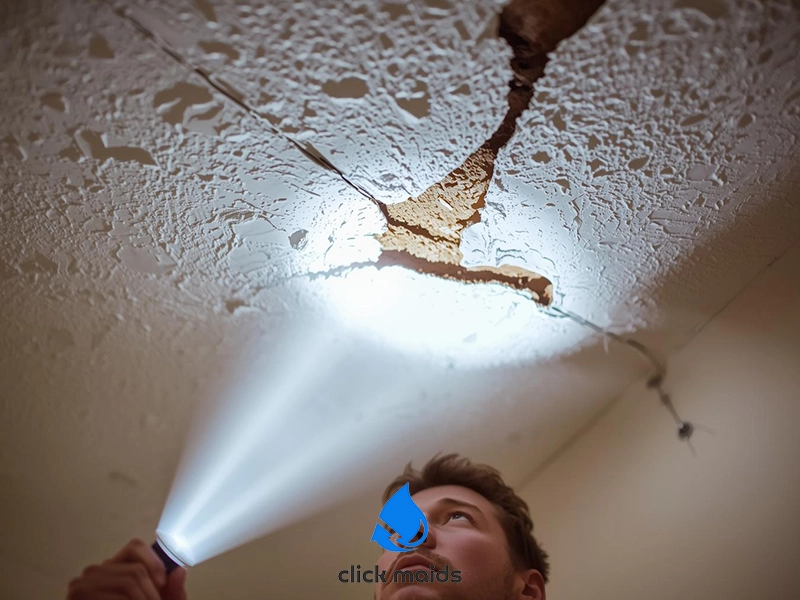
If you notice bubbling paint, sagging drywall or a musty odor, mold may be growing behind the ceiling. In such cases, cleaning the surface alone will not solve the problem. Structural moisture damage may require more extensive remediation.
Conclusion
Learning how to properly clean mold off ceiling surfaces can protect both your home and your indoor air quality. Addressing moisture sources, using safe cleaning methods and acting quickly when mold appears can reduce the risk of long-term damage. If you need help with removing mold and thoroughly cleaning your home, Click Maids is here to help.
Read More: How to Clean the House After Renovation