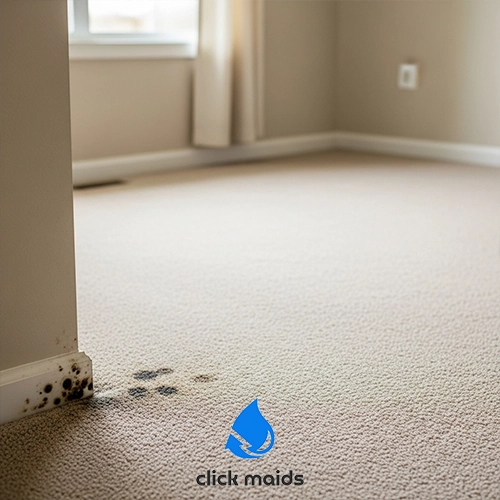

Mold in your carpet isn’t just ugly; it can mess with your indoor air quality and cause allergies if you don’t take care of it. People usually look up how to get mold out of carpet when they smell something musty or spot dark areas growing on their carpet. This guide covers why carpet gets moldy, what you can do about it right away, and when it’s best to call in the pros.
Ready for a Cleaner Space?
Schedule Your Service Today
Call us today and book your service; we’ll get your spotless home back to you!
Call us on (587) 355-3590 and our experts will guide you through the whole process.
Why Mold Develops in Carpeted Areas
Carpets can easily grow mold if they get wet. Even small spills can soak through to the padding and stay hidden.
Common Triggers
- Water leaks or flooding
- High indoor humidity
- Wet shoes and winter slush
- Poor ventilation
- Delayed drying after spills
To get mold out of your carpet, it’s important to know where it’s coming from. Just cleaning the surface won’t fix things if there’s still wetness.
First Response: What to Do as Soon as You Spot Mold
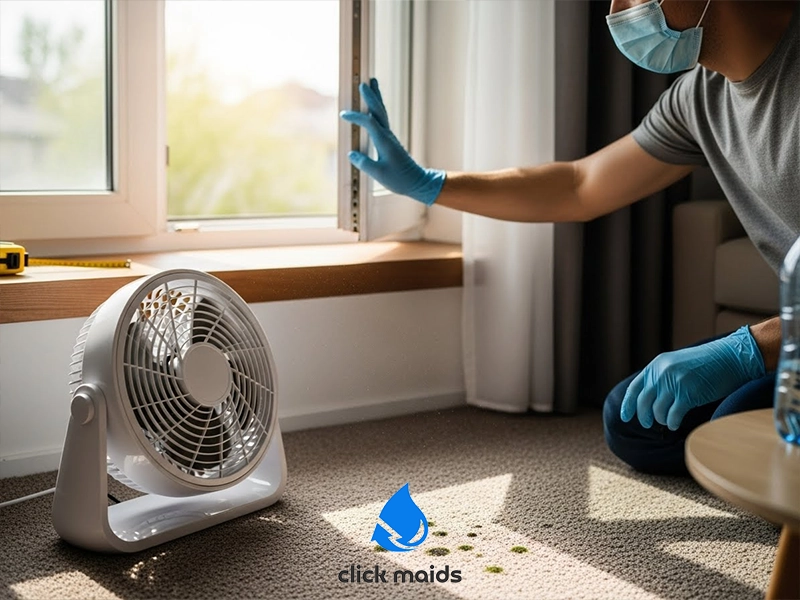
Immediate Steps
- Open the windows to let some air in.
- Put on gloves and a mask
- Avoid walking on the affected spot
- Dry the carpet thoroughly using fans or a dehumidifier
These initial steps will help with any method used to get mold out of carpet.
DIY Methods: How to Get Mold Out of Carpet at Home
For small, surface-level mold spots, DIY methods may help.
Basic Cleaning Approach
- Vacuum using a HEPA-filter vacuum
- Apply white vinegar or hydrogen peroxide lightly
- Let sit for several minutes
- Gently blot, don’t scrub
- Dry completely
This process can help get mold out of carpet fibers, but it may not reach the padding underneath.
DIY vs Professional Carpet Mold Removal
Here’s a simple guide to when DIY home fixes can help, and when it’s time to call a pro.
Situation | DIY Cleaning | Professional Cleaning |
Small surface spots | Sometimes effective | Highly effective |
Mold in padding | Not effective | Required |
Strong odor present | Limited results | Full removal |
Repeated mold return | Unlikely to solve | Long-term solution |
This comparison helps homeowners figure out the best way to remove mold from carpets, depending on how bad the problem is.
How to Tell If Mold Is Too Deep for DIY Cleaning
Some signs indicate mold has moved beyond the carpet surface.
Red Flags
- Persistent musty odor
- Discoloration returning after cleaning
- Carpet feels damp underneath
- Health symptoms worsen indoors
- Previous water damage history
If you keep trying to handle these things yourself, you might just spread the spores around instead of getting rid of them.
Preventing Mold After Carpet Cleaning
After fixing the issue, focus on stopping it from happening again.
Prevention Tips
- Keep humidity under control
- Dry spills immediately
- Use entry mats during winter
- Clean carpets regularly
- Address leaks promptly
Following these steps will help you avoid future mold problems in your carpet.
When Professional Help Makes Sense
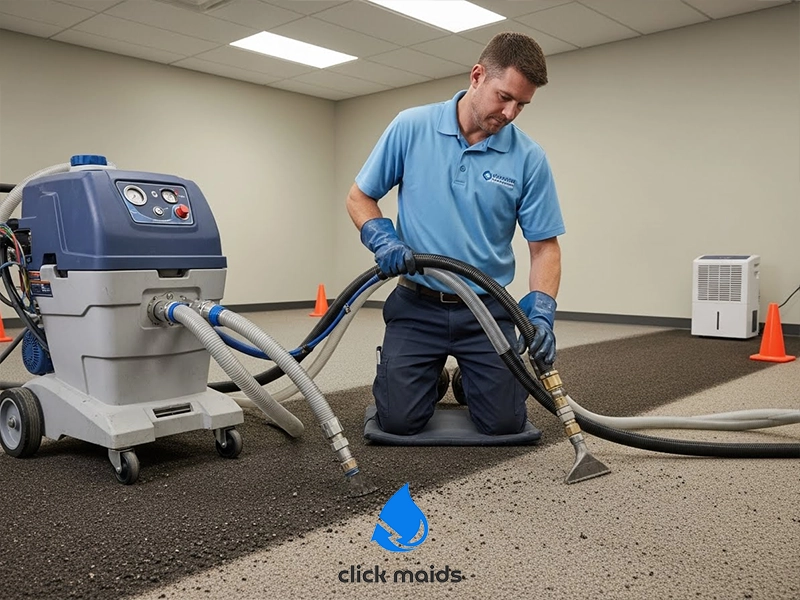
Dealing with carpet mold usually means going beyond a quick surface clean. Experts use special tools and cleaning stuff that gets way down into the carpet fibers and padding.
If you’re a homeowner struggling with mold that keeps coming back or covers a big area, Click Maids can professionally clean your carpets. We’re trained to safely get rid of mold and freshen up your home.
Conclusion
Understanding how to get mold out of carpet starts with acting fast and recognizing the limits of DIY methods. While light mold may respond to home treatment, deeper contamination usually needs professional care to fully resolve the issue. Addressing both moisture and mold ensures a cleaner, healthier living space.
Also Read: How Can You Remove Grease Stains Without Ruining Surfaces?